Medicine By Day. Admin By Night
The Dark Side of DPC
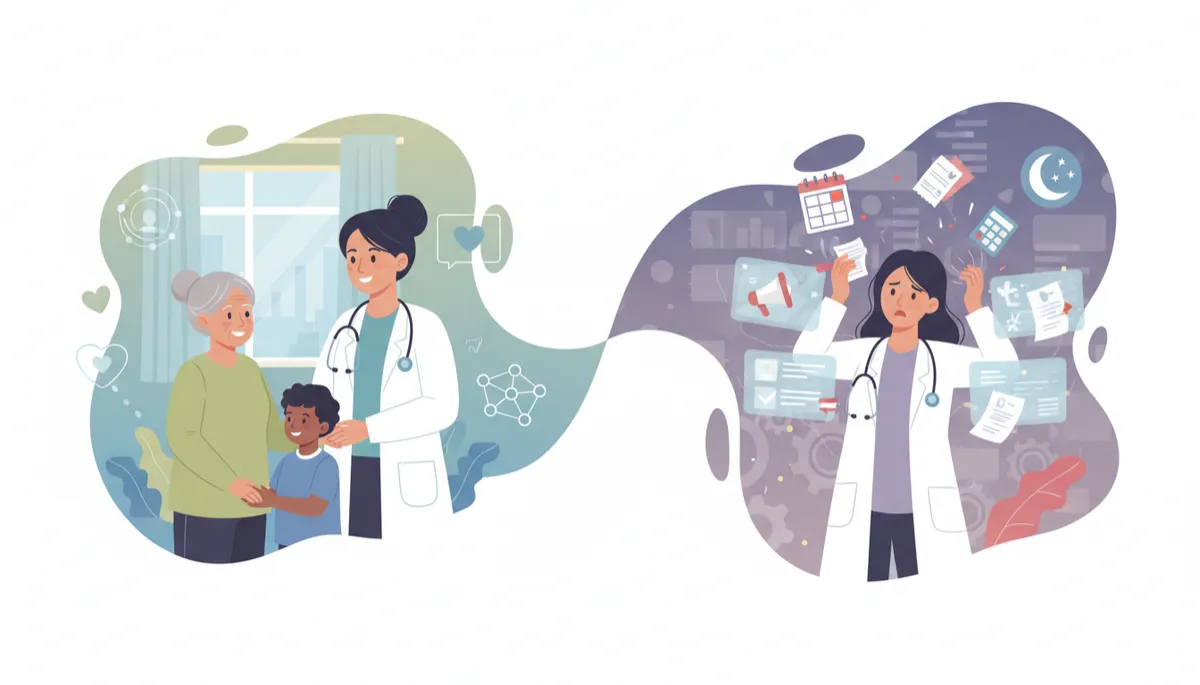
You left the machine to practice medicine your way: longer visits, real relationships, no running behind. Hopefully someone told you that you'd also become your own scheduler, biller, marketer, and after-hours answering service. Six months in, you're answering patient texts at 10 pm, manually posting to Instagram because you haven't had time to plan content, and Googling “how to respond to a bad Google review” at midnight.
This is the dark side of DPC. The clinical work is exactly what you hoped for. The operational load is a second job you didn't realize would become so overwhelming. Here's where to actually get relief.
“Direct primary care physicians report high professional satisfaction, but also describe significant administrative and business burdens when running independent practices.”
— American Academy of Family Physicians, DPC Survey Report, 2022
Real‑world snapshot: One physician in her first year of DPC tracked her time for a month and realized she was spending 12–15 hours per week on non-clinical work: rescheduling visits, chasing missed payments, replying to basic questions, and trying to keep up with social media. Her panel was only at 40% of her goal size, but her workweek already felt like two jobs.
Let a chat widget and basic voice AI handle the repetitive stuff.
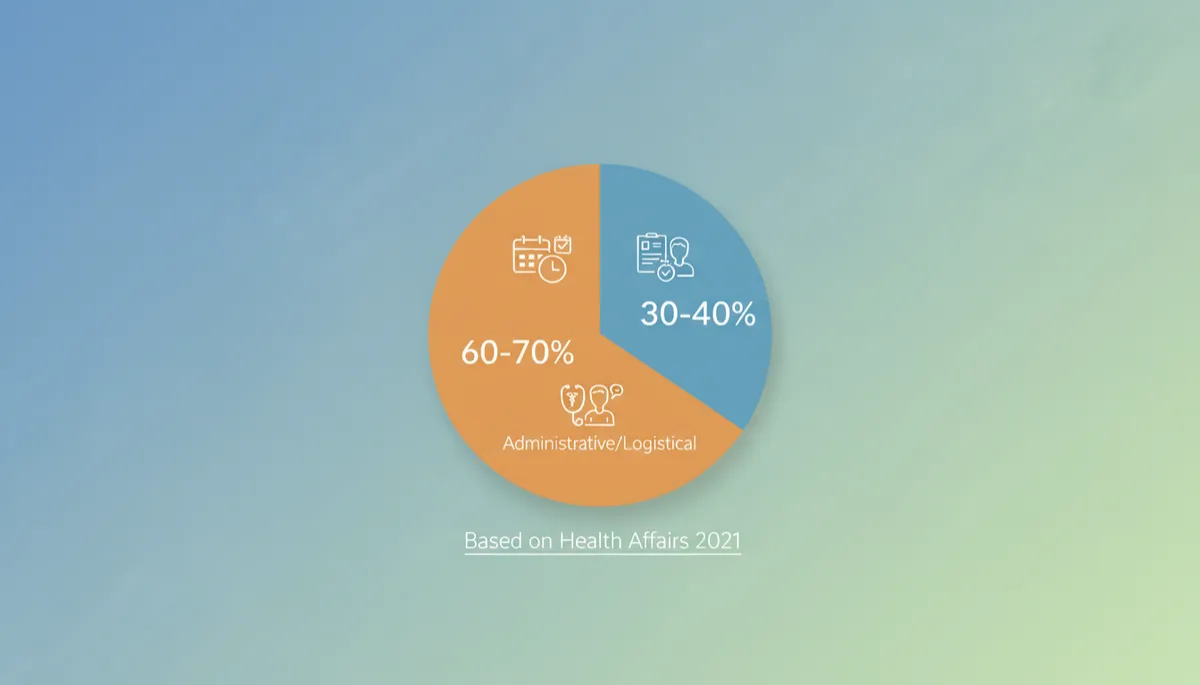
Most patient messages aren't clinical. They're “what are your hours,” “do you take my insurance,” “can I switch my appointment.” A chat widget on your site and a voice AI line that answers routine questions and routes anything urgent to you frees up a real chunk of your evening without sacrificing the DPC personal touch.
📌 Key Takeaway: In one analysis, up to 60–70% of inbound patient messages to primary care practices were administrative or logistical rather than clinical, meaning they can often be safely handled by structured workflows or automation when designed well (Health Affairs, 2021).
Real‑world example: A solo DPC in the Midwest added a simple website chat and AI-assisted phone line that could answer FAQs, send links to the membership page, and route urgent calls to the physician’s cell. Within 60 days, after‑hours interruptions dropped from an average of 18 to 6 per week, and the doctor was able to stop checking the office phone app every hour at night. Patient satisfaction scores on “responsiveness” actually improved, because patients got immediate answers to basic questions instead of waiting for a callback.
Case study: A two-physician DPC in the Pacific Northwest mapped out their top 25 repetitive questions and built them into their chat and voice flows. Over three months, 72% of incoming messages were resolved without the doctor touching their phone, average response time for basic questions fell from “same day” to under two minutes, and both physicians reclaimed roughly 5 hours per week that they reallocated to same-day visits and panel outreach.
Stop building your social calendar from scratch every week.
Patients find DPC through word of mouth and social proof more than any other way, but sitting down to write captions for social media after a full clinic day isn't happening consistently. But you know posting on social media matters. A social planner with AI-assisted captions gets you from a blank page to scheduled post in minutes, instead of an hour you don't have.
“Nearly 3 out of 4 patients say online information — including social media — influences their choice of a new doctor.”
— PatientPop Consumer Survey on Healthcare Reputation, 2021
Case study: A suburban DPC in Texas committed to one hour per month with an AI-powered social planner. They loaded common topics (membership FAQs, chronic disease coaching, behind‑the‑scenes practice updates) and let the tool draft captions and hashtags. In three months, their Instagram posting cadence went from 2 posts a month to 3 posts a week, website traffic from social doubled, and they added 19 new members who cited “your posts” or “your stories” as how they found the practice.
Real‑world example: A rural DPC in the Southeast used an AI content planner to repurpose what they were already doing in clinic: answering common questions about membership, explaining lab pricing, and sharing quick prevention tips. By batching one afternoon each quarter, they scheduled 90 days of posts across Facebook and Instagram. Over the next six months, direct website inquiries mentioning “saw you on Facebook” increased by 140%, and the practice filled its remaining membership slots without running paid ads.
Put reputation management on autopilot.
Your first dozen Google reviews matter enormously for the next fifty patients who are deciding whether to trust a new, unfamiliar model. Instead of hoping happy patients remember to leave one, a review request goes out automatically after a great visit. Turn the satisfaction you already earned into visible proof for the next person googling “direct primary care near me.”
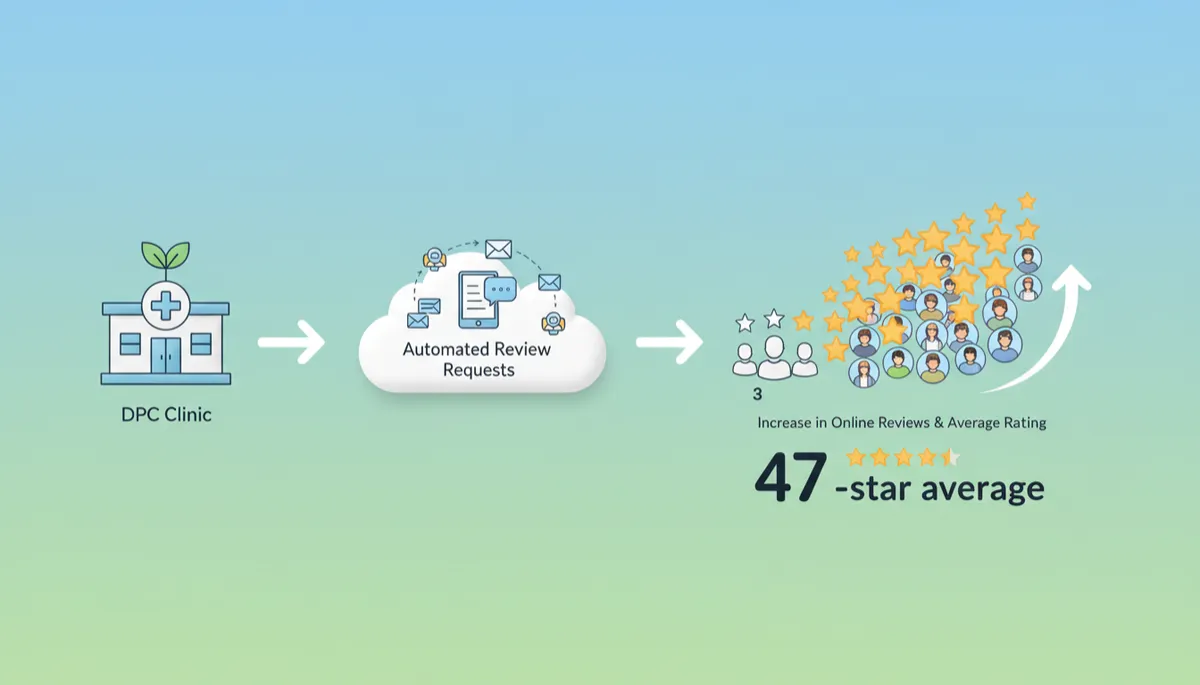
💡 Pro Tip: Practices that implement systematic review requests can see two to three times more online reviews, and patients are 2.3 times more likely to choose providers with a strong recent review profile (Software Advice Patient Survey, 2020).
Real‑world example: A new DPC clinic in a competitive urban market set up automated review requests by text after annual exams and first‑month follow‑ups. In the first 90 days, they went from 3 reviews to 47 reviews, with an average rating of 4.9 stars. When they asked new patients why they joined, over half mentioned “your Google reviews” or a specific story they read there as the reason they felt safe trying DPC.
Case study: A mature DPC in the Midwest had a stable panel but flat new inquiries, with just 11 total reviews accumulated over five years. After turning on automated review workflows tied to wellness visits and annual physicals, they averaged 10–12 new reviews per month. Within six months, they crossed 80 total reviews, moved to the top three map results for “direct primary care” in their city, and saw a 55% increase in monthly discovery calls.
Protect your actual off hours.
The DPC promise to patients is access. The DPC promise to yourself has to include boundaries. Automations that acknowledge a message immediately and set expectations (“got your message, I'll follow up by tomorrow morning unless this is urgent”) let you enjoy movie night with your family, instead of checking your phone out of guilt.
“Clear communication of response times and boundaries is associated with lower burnout and higher patient satisfaction in primary care.”
— Shanafelt et al., Mayo Clinic Proceedings, 2019
Case study: One coastal DPC used templated automations for after‑hours texts: every non‑urgent message got an instant reply setting expectations for a response by the next business day and providing a clear “if this is an emergency, do X” script. Over six months, the physician saw a 35% drop in late‑night message volume, reported actually taking two uninterrupted weekends a month, and still maintained a 5‑star rating on “access” in quarterly patient surveys.
Real‑world example:
A new DPC mom of two in the Mountain West set a rule that anything sent after 6 pm triggered an automation: an empathetic acknowledgment, clear response window, and emergency instructions. She paired this with a short onboarding script explaining her availability. Within three months, her average evening screen time on work apps dropped by 40%, she stopped bringing her laptop to the dinner table, and her patient panel still rated “ease of access” at 4.9 out of 5.
None of this replaces the relationship-driven care that made you choose DPC in the first place. It protects your ability to keep doing it without burning out in a year. Harmony Ops bundles chat, voice AI, social planning, and reputation management into one system, so DPC busywork doesn’t eat up the hours you got back when you left fee-for-service.
📈 Ready to improve your patient flow, systems, and efficiency?
Get your personalized audit here:
https://24-7-bot.harmonyopsfordpc.com/audit
👉 Learn more about Harmony Ops:https://24-7-bot.harmonyopsfordpc.com/dpc

